
Fuelled by the $57.8-billion merger of HDFC twins (HDFC Ltd and HDFC Bank), M&A (merger and acquisition) transactions in India touched a record high of $124.2 billion in the first half of 2022-23. Bankers said with several transactions, including the government's stake sale in IDBI Bank and Hindustan Zinc in the pipeline, the ongoing financial year will end up as the best year for M&A activity in the country. Apart from the HDFC transaction, the $6.5-billion acquisition of Holcim stake by the Adani family and L&T's $3.2-billion acquisition of Mindtree added to the record transactions in the first half of FY23.

The government has a two-pronged strategy for e-auction of cancelled coal blocks.

Had you invested Rs 10,000 each in JSW Steel, Titan Company and Bajaj Finance 20 years ago, when they were just penny stocks (trading below Rs 10), you would have become a millionaire by now.

Mining baron Anil Agarwal-led Vedanta Group has bid for the most number of 14 coal mines out of 23 on offer in the first round of auction which also have aggressive bids by Aditya Birla Group, Adani and Naveen Jindal group, but was shunned by foreign players.

Among the many exits from the billionaire's club in 2022 are D Uday Kumar Reddy of Tanla Solutions (net worth down 66 per cent), Sushil Kanubhai Shah of Metropolis Healthcare (down 65.7 per cent), Vijay Shekhar Sharma of One97 Communications (down 66 per cent), and C K Birla (down 43.4 per cent).
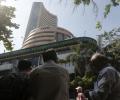
Among the Sensex firms, Tech Mahindra, Tata Motors, Bharti Airtel, Wipro, Bajaj Finserv, HCL Technologies, Bajaj Finance, Larsen & Toubro, Mahindra & Mahindra and UltraTech Cement were the biggest laggards. IndusInd Bank, Power Grid, HDFC Bank, ICICI Bank, NTPC, Reliance Industries, HDFC and Tata Steel were the prominent winners.

Benchmark equity indices Sensex and Nifty closed higher by more than half a per cent on Wednesday following buying in IT, financial and oil stocks after the RBI slowed down the pace of interest rate hikes. Ending its two-day slide, the 30-share BSE Sensex rebounded by 377.75 points or 0.63 per cent to close at 60,663.79 with 24 of its constituents posting gains. The broader Nifty of the NSE spurted by 150.20 points or 0.85 per cent to settle at 17,871.70, riding on a rally in Adani Enterprises, Adani Ports and HDFC Life.

'Sonia did not visit this place once since she won. Who's to say they won't lose this one, too?'
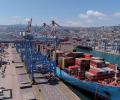
India's private and state government-owned ports (non-major ports) continued to grow faster than those owned by the Centre (major ports) through the first three quarters of 2023-24 (FY24), cargo handling data shows. At 604 million metric tonnes (mmt), cargo at major ports grew by 5 per cent between April and December, while non-major ports' cargo traffic growth was 11 per cent at 531 mmt. During December 2023, central government-owned ports in India handled cargo volumes of 69.9 mmt, a tepid year-on-year (Y-o-Y) growth of 0.7 per cent.

Moody's Investors Service on Wednesday raised the rating outlook for 18 Indian corporates and banks, including Reliance Industries, Infosys, SBI and Axis Bank, to 'stable' from 'negative'. This follows the upgrade by the US-based rating agency in India's sovereign rating outlook to 'stable' from 'negative' on Tuesday. The agency had affirmed the sovereign rating at 'Baa3'.

Over half, or 269 NSE 500 stocks, have given over 10-fold (10x) returns in the last two decades, finds a recent report by Goldman Sachs that analysed 10 major markets across emerging and developed markets (EM/DM) that covered 6,700 stocks. The report examined '10-baggers' - stocks that have generated at least 10x total returns within a rolling 5-year period over the past two decades. Some of the prominent ones that comprise these 269 stocks in the Indian context stocks that delivered over 10x total returns over a 5-year rolling period since 2000 as per Goldman Sachs includes Westlife Foodworld, Bharti Airtel, Adani Total Gas, Patanjali Foods, Larsen & Toubro, BEML, Blue Star, Shree Cement, Lupin, Godrej Industries, Astral, Adani Enterprises, Hindustan Petroleum and Deepak Fertilisers.

Among Sensex stocks, Tata Motors rose the most by 2.79 per cent. NTPC, Reliance Industries, Infosys, TCS, HDFC twins, Tata Motors, ITC, Power Grid and Bajaj Finserv were among the major gainers. Tata Steel fell the most by 1.22 per cent. L&T, Sun Pharmaceuticals, IndusInd Bank and Ultratech Cement were among the losers.

Kharge also targeted Prime Minister Narendra Modi, saying the people should not believe Modi's "guarantees".

For someone who is such an indefatigable litigant, what is stopping Mr Saxena from using the law to depose Mr Kejriwal? Maybe we will get the answer after May 25, notes Aditi Phadnis.

The much-talked-about sale of Ambuja Cement and ACC by Holcim Group will see the single-biggest outflow of foreign capital from the country if the two cement firms are acquired by Indian investors. The deal, valued at nearly $10.35 billion, will put in the shade Cairn Energy Plc's exit from India in 2010, when it sold Cairn India to Vedanta Group for $4.48 billion. According to various reports, big business groups such as AV Birla, JSW Group, and Adani Group are in the fray to acquire Holcim's assets in India.

Equity mutual funds (MFs) deployed maximum in shares of Reliance Industries (RIL) in June at Rs 2,177 crore, followed by Maruti Suzuki (Rs 2,045 crore) and Bharti Airtel (Rs 1,310 crore). Shares of both RIL and Bharti Airtel have been turbulent this month. On July 1, shares of RIL crashed over 7 per cent, following the government imposing windfall taxes on domestic crude oil production and fuel exports.

From the Sensex pack, Mahindra & Mahindra, UltraTech Cement, Power Grid, State Bank of India, ITC, Titan, Tata Motors and ICICI Bank were among the major winners. Tata Consultancy Services, Bajaj Finance, Tech Mahindra, Asian Paints and HDFC were among the major laggards.
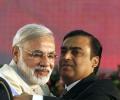
The calculation excludes cross-holding of listed group cos in each other.

The words 'industry', 'industrial development', 'jobs', and 'employment' have been ringing with higher frequency since Mamata Banerjee stepped into her third term with landslide victory after a high-octane election last year. "Our government's next target is industrial development," the chief minister (CM) had been heard stating at different public meetings in the past few months - perhaps setting the tone for the sixth edition of the Bengal Global Business Summit (BGBS) slated for later this month. Investor summits by any state are about intent, big numbers, and tall claims. Yet in competitive federalism, its importance as a marketing tool is undeniable.

Operating margins have been the primary driver of corporate earnings in India in recent quarters, despite revenue growth suffering from weak consumer demand. Companies across sectors have reported a sharp improvement in earnings before interest, tax, depreciation, and amortisation (Ebitda) margins over the past two years, benefiting from lower commodity and energy prices. Higher margins more than compensated for slower revenue growth, resulting in double-digit growth in net profit for five consecutive quarters.

The National Stock Exchange (NSE) Nifty Next 50 Index could undergo large-scale changes if the proposed tweaks to its computation methodology get implemented. In a discussion paper floated recently, NSE Indices, which owns and manages a portfolio of over 350 indices under the Nifty brand, proposed that only stocks that are traded in the futures and options (F&O) segment can be part of the index. Currently, as many as 11 non-F&O stocks are part of the Nifty Next 50 Index, which, as the name suggests, represents the next rung of large and liquid securities after the Nifty50.

Zerodha and True Beacon co-founder Nikhil Kamath, along with Abhijeet Pai, has invested in Omnipresent Robot Tech through their investment arm Gruhas Proptech. This round also saw co-investments from Kavin Shah, and other individual high networth individual (HNIs), according to a statement released on Thursday. However, the amount invested by Kamath and Pai has not been disclosed.

Ajit Mishra, vice president, Research, Religare Broking, answers your stock market queries.

The sale of Essar Oil was India's biggest deleveraging exercise undertaken by any debt-heavy group

India's equity markets are on a roller-coaster ride, after delivering spectacular returns for two consecutive years - in 2020 and 2021. The benchmark National Stock Exchange's (NSE's) Nifty50 is down 1.5 per cent in the first nine months of the current calendar year 2022 (CY22) as foreign portfolio investors sold Indian stocks due to rising bond yields in the US and across global markets, including India. The sell-off in the Indian equity markets has, however, not been broad-based and largely limited to sectors facing earnings headwinds from rising interest rates, lower commodity and energy prices, and likely economic recession in advanced economies.

'Both the people have a perspective and are people of stature and people of understanding'

India Inc could be embarking upon a new phase of capital expenditure (capex) cycle, observed analysts, and suggest its revival would lead to a rerating of industrial stocks. Assisted by a property upcycle, analysts at Jefferies said several government initiatives were likely to drive capex. Indicators, they said, include a private project announcement at Rs 25 trillion for 2022-23 (up 150 per cent from pre-pandemic levels) and credit growth at about 16 per cent, which is closer to pre-pandemic highs.

Ajit Mishra, vice president, Research, Religare Broking, answers your queries.

Changes have been made in several indices including Nifty 500, Nifty 200, Nifty 100, Nifty Midcap 150, Nifty Smallcap 250 and host of sectoral indices including FMCG, IT, media, pharma, commodities and services sector.

Ajit Mishra, vice president, Research, Religare Broking, answers your queries.

'The Fed rate will peak in the range of 5.1-5.3 per cent during the second quarter of CY23 and will most likely stay there for a while before rate cuts start in CY24.'

'While foreign institutional investor flows are still negative, they will turn positive in the latter part of 2023 as India's resilient growth becomes perceptible.'

India always faces a Hobson's choice as far as feeding coal-fired generators goes - even if the government is reluctant to admit it. The country cannot do without shipping in the world's most polluting fuel from overseas. And it will continue to do so unless it decides to reduce demand by forcing citizens, farmers and businesses to live without electricity for part of the day, or use diesel generators to fire facilities.
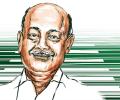
Radhakishan S Damani, investor and promoter of the D-Mart supermarket chain, has broken into the elite club of the top 100 global billionaires. Damani, who grew up in a single-room apartment in Mumbai, is now ranked 98th on the Bloomberg Billionaires Index with $19.2 billion as his net worth. The index is a daily ranking of the world's richest people. The other Indians on the top 100 rich list ahead of Damani are Mukesh Ambani, Gautam Adani, Azim Premji, Shiv Nadar, and Lakshmi Mittal.

Tesla Inc chief Elon Musk is set to acquire micro-blogging site Twitter for about $44 billion. Back home, India Inc, too, is seeing aggressive merger and acquisition (M&A) activity with PVR-Inox and HDFC-HDFC Bank announcing their mergers recently. While Axis Bank recently acquired Citi India's India retail business, reports suggest Larsen & Toubro Infotech (LTI) and Mindtree could be eyeing a merger.

Ajit Mishra, vice president, Research, Religare Broking, answers your queries.

The broader markets, however, outperformed the benchmark indices -- BSE Midcap and Smallcap indices ended up 0.6%-1%.

Domestic equity markets are likely to see volatility in a range-bound trade this week amid geopolitical worries and growing expectations of a sharp hike in interest rates, analysts said. Global trends, inflation data and the last batch of quarterly earnings will drive the markets this week, they said. Besides, the rupee movement, FII investment pattern and Brent crude trends would also be watched by investors.
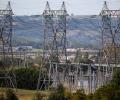
The company will now focus on value creation for shareholders in the defence and construction businesses.

'Is it advisable to have more number of scrips in small quantities or a few scrips in big quantities?'
